Mr Paul Pavlou, a specialist knee surgeon based in Bournemouth, often finds that patients are keen to understand the key milestones in their recovery journey. Reaching the point of 6 weeks after knee arthroscopy is a significant step, often marking a transition from early healing to regaining more advanced function. This article explores what patients can typically expect at this stage, including progress in mobility, pain levels, and the safe return to daily activities.
Following a knee arthroscopy, a minimally invasive procedure used by Mr Pavlou to treat a range of knee issues, the body undergoes a structured healing process. The 6-week mark is not an endpoint but a crucial checkpoint. For many, it is the stage where the benefits of the surgery become more apparent, and a clearer path to full recovery emerges. However, progress is highly individual, and this guide serves to provide a general overview of this important phase.
Your Knee at the 6-Week Mark: A Snapshot
By 6 weeks after knee arthroscopy, a significant amount of healing has taken place. The small incisions from the keyhole surgery are typically well-healed, and the internal structures of the knee are becoming more robust.
At this stage, many patients report a noticeable reduction in pain and swelling compared to the initial post-operative weeks. While some discomfort or intermittent swelling, particularly after activity, can still be normal, the constant ache has often subsided.
Functionally, the knee should feel more stable and reliable. The range of motion is expected to have improved substantially, with patients able to bend and straighten their leg with much greater ease.
The focus of rehabilitation often shifts towards building strength and endurance in the muscles supporting the knee, which is vital for long-term success. A follow-up consultation with Mr Pavlou around this time is common to assess progress and provide clearance for advancing to the next stage of activity.
Pain, Swelling, and Mobility 6 Weeks After Knee Arthroscopy
While the acute pain from surgery has usually resolved by the six-week point, it is not uncommon for patients to experience some level of discomfort. This is often described as a deep ache or a feeling of tightness within the joint, especially after increasing activity levels or physiotherapy sessions. Swelling can also persist, although it should be considerably less than in the first few weeks. Managing this involves continuing with gentle icing after exercise and elevating the leg when resting.
In terms of mobility, most patients should be walking without crutches and with a relatively normal gait pattern. Limping should be minimal as muscle control and confidence improve. The goal is to have achieved, or be close to achieving, a full range of motion that is symmetrical with the non-operated knee.
If stiffness remains a significant issue at 6 weeks, it is an important point to discuss with the physiotherapy team and Mr Pavlou, as further intervention or a modified exercise plan may be required.
Activities and Exercise: What is Safe at 6 Weeks?
This is the phase where patients can often start reintroducing more varied physical activities, but caution is still key. Under the guidance of a physiotherapist, exercises will become more challenging and functional.
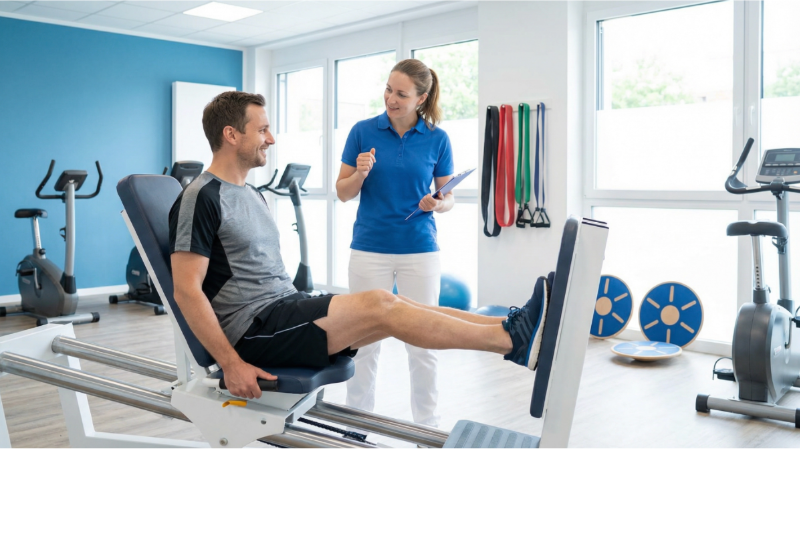
This may include progressing to using a stationary bike with light resistance, performing more advanced strengthening exercises like leg presses, and starting balance and proprioception training to improve the knee’s awareness in space.
Low-impact activities are generally encouraged. Swimming is an excellent option as it allows for movement and strengthening without stressing the joint. While walking is beneficial, long distances should still be approached with care.
High-impact activities such as running, jumping, or sports involving sudden changes of direction are typically not recommended at this stage. Mr Pavlou emphasizes that a gradual return to such activities is essential to prevent re-injury, and this process usually begins much later in the recovery timeline, often after the three-month mark.
Returning to Work, Driving, and Daily Life
Six weeks after knee arthroscopy often represents a turning point for returning to a more normal daily routine. For those with desk-based jobs, a return to work has likely already happened. However, for individuals in physically demanding roles, this may be the point where a phased or full return becomes possible, depending on the specific physical requirements of their job.
Most patients are cleared to drive well before the six-week mark, but if there were any complications or a more complex procedure was performed, this is certainly a time when driving should be comfortable and safe. Household chores and other daily tasks should feel much more manageable. The key is to listen to the body and pace activities accordingly. Pushing through significant pain is not advisable and can be a sign of doing too much, too soon.
A consultation with Mr Pavlou provides the formal guidance needed for a safe return to all work and life activities. In summary, the 6-week milestone after knee arthroscopy is one of significant progress, where improved function and reduced pain allow for a greater return to normality. It is a time to build on the foundations of early rehabilitation and focus on progressive strengthening.
For patients in the Bournemouth area, Mr Paul Pavlou provides expert guidance throughout the recovery process, ensuring each individual has a tailored plan to achieve the best possible outcome. If you have questions about your recovery, a consultation can provide the clarity and personalised advice you need.
Frequently Asked Questions for 6 Weeks After Knee Arthroscopy
1. Is it normal to still have pain 6 weeks after knee arthroscopy?
Yes, it is normal to have some mild to moderate pain or discomfort, especially after activity. The acute surgical pain should be gone, but the healing tissues can still be sensitive. If pain is severe or worsening, you should contact your surgeon.
2. Can I kneel 6 weeks after knee arthroscopy?
Kneeling can be uncomfortable for many weeks or even months due to pressure on the incision sites and the front of the knee. It is best to avoid it if it causes pain. Mr Pavlou can provide specific advice based on the surgery performed.
3. What exercises should I be doing 6 weeks after knee arthroscopy?
At 6 weeks, exercises often focus on building strength, endurance, and balance. This may include stationary cycling, leg presses, and single-leg balance drills, as guided by your physiotherapist.
4. Why does my knee click and pop 6 weeks after surgery?
Some clicking or popping (crepitus) can be normal as the joint fluid and mechanics readjust after surgery. As long as it is not associated with pain or swelling, it is usually not a cause for concern, but it is always best to mention it at your follow-up appointment.
5. When can I return to running after knee arthroscopy?
Returning to running typically takes longer than 6 weeks. Most surgeons, including Mr Pavlou, advise waiting until at least 8-12 weeks and ensuring you have met specific strength and stability criteria before gradually reintroducing running.
This article provides general information and is not a substitute for professional medical advice. Recovery experiences can vary. A formal consultation is required for a personalised treatment and recovery plan.
References
[2] PWR Physio. (2024, September 25 ). Week-by-Week Post-Op Knee Rehab Milestones. Retrieved from
[4] Plymouth Hospitals NHS Trust. (n.d. ). Recovering from an Arthroscopy. Retrieved from
[6] OrthoInfo – AAOS. (n.d. ). Knee Arthroscopy Exercise Guide. Retrieved from
[7] Omaha Knee. (n.d. ). Knee Arthroscopy Exercise Guide. Retrieved from
[9] Proliance Orthopedic Associates. (n.d. ). Knee Arthroscopy | Arthroscopic Surgery.