Knee Realignment Surgery in Bournemouth
Mr Paul Pavlou, a specialist knee surgeon in Bournemouth, offers expert assessment and treatment for knee conditions, including knee realignment surgery. This procedure can be a valuable option for active individuals experiencing pain from the early stages of osteoarthritis, helping to preserve the knee joint and delay the need for a knee replacement. Mr Pavlou provides a comprehensive evaluation to determine if this surgical approach is the most suitable treatment for your specific knee condition.
What is Knee Realignment Surgery?
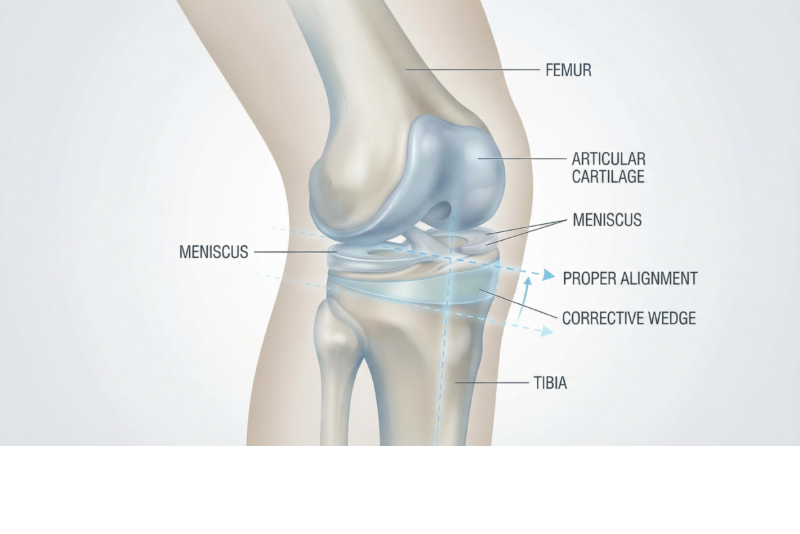
Knee realignment surgery, also known as a high tibial osteotomy, is a surgical procedure designed to correct poor knee alignment and relieve pressure on the damaged part of the knee joint. In many cases of knee osteoarthritis, the damage is concentrated on one side of the joint, often the inner (medial) side, due to an uneven distribution of weight. This surgical intervention involves precisely cutting and reshaping the upper part of the shinbone (tibia) to shift the body’s weight from the arthritic area to a healthier, undamaged part of the knee. By redirecting these forces, knee realignment surgery can significantly reduce pain and improve function, prolonging the life of the natural knee joint.
Are You a Suitable Candidate for Knee Realignment Surgery?
Determining whether you are a good candidate for knee realignment surgery requires a thorough assessment by a specialist knee surgeon. Mr Pavlou will consider several factors to decide if this is the right option for you. Generally, this procedure is most successful for active patients under the age of 60 who are in the early stages of unicompartmental osteoarthritis, where the damage is confined to a single area of the knee.
Ideal candidates typically experience knee pain during activity or after standing for long periods, have no pain under the kneecap, and can fully straighten and bend their knee to at least 90 degrees. This knee surgery is not usually recommended for individuals with inflammatory arthritis, such as rheumatoid arthritis.
The Knee Realignment Surgery Procedure: What to Expect
The knee realignment surgery is a precise procedure performed by a specialist knee surgeon to correct the alignment of the lower limb. Mr Pavlou will begin by making a carefully planned cut in the shinbone, near the knee joint. Depending on the specific correction required, a small wedge of bone is either removed (a closing wedge osteotomy) or a space is created and held open with a specialised implant (an opening wedge osteotomy).
This adjustment realigns the leg, redirecting the load-bearing axis to the healthier part of the knee cartilage. The bones are then stabilised with a plate and screws, which hold them in the new, corrected position while they heal. The entire procedure is planned with precision to ensure the best possible outcome for each patient.
Benefits of Knee Realignment Surgery
For the right patient, knee realignment surgery offers several significant benefits. One of the primary advantages is that it preserves the patient’s own knee joint, which can delay the need for a total knee replacement for many years.
Following a successful recovery, there are typically no restrictions on physical activities, allowing patients to return to an active lifestyle, including high-impact sports. This makes it an excellent option for younger, more active individuals who wish to maintain their level of activity. By relieving pain and improving knee function, this type of knee surgery can lead to a substantial improvement in quality of life.
Recovery After Knee Realignment Surgery
Recovery from knee realignment surgery is a gradual process that requires patience and commitment to rehabilitation. After the procedure, you will likely need to use crutches for several weeks to keep weight off the operated leg, and your knee may be protected with a brace or cast while the bone heals.
Mr Pavlou will provide detailed instructions on when you can begin to bear weight on your leg. A structured physical therapy programme is essential to restore your knee’s range of motion and strength. While the bone typically takes about six weeks to heal, most patients can expect to return to their full range of activities within three to six months. Mr Pavlou will monitor your progress closely to ensure a smooth and successful recovery.
If you are experiencing knee pain and believe you may benefit from knee realignment surgery, a consultation with a specialist knee surgeon is the first step. Mr Pavlou offers expert diagnosis and personalised treatment plans for patients in Bournemouth and the surrounding areas. To book an assessment, please contact his practice.
This article is for general information only and does not constitute medical advice. Treatment outcomes can vary, and a full consultation with a qualified specialist is required to determine the most appropriate course of action for your individual circumstances.
Frequently Asked Questions
The surgery itself typically takes between one and two hours, depending on the complexity of the individual case. This will be performed by a specialist knee surgeon in a hospital setting.
As with any surgery, some postoperative pain is expected. However, this is managed with a combination of pain relief medications. The goal is to keep you as comfortable as possible during your recovery.
For many patients, the benefits of knee realignment surgery can last for ten years or more. This can be an effective way to delay the need for a knee replacement while maintaining an active lifestyle.
Alternatives may include non-surgical treatments like physical therapy, bracing, and anti-inflammatory medications. For more advanced arthritis, a partial or total knee replacement may be recommended.
Your ability to drive will depend on which leg was operated on and the type of vehicle you drive. Mr Pavlou will provide specific guidance, but it is often possible to resume driving after 6-8 weeks, once you are no longer taking strong pain medication and have regained sufficient muscle control.When can I drive after knee realignment surgery?